Claim to Fame
Josefov (the Jewish Quarter) is home to one of the world’s best-preserved concentrations of medieval Jewish monuments—six historic synagogues, the Old Jewish Cemetery, and the UNESCO-listed Jewish Museum.
📌 Navigating Jewish Quarter : Answers to Frequently Asked Questions
- Admission Fee: Admission fees vary by site, with some attractions free and others charging a small fee.
- How Long to Visit: Visitors typically spend 2 to 4 hours exploring the Jewish Quarter.
- Washrooms: Public washrooms are available at select locations, including visitor centers and cafes.
- Hours of Operation: The Jewish Quarter is open year-round, with varying hours depending on the season and specific sites.
- Important Information: Be mindful of religious observances and dress codes when visiting synagogues and other sacred sites.
- Handicap Accessible: The Jewish Quarter is mostly accessible, but some historic sites may have limited mobility options.
- Pets: Pets are generally not allowed in most historical sites but may be permitted in outdoor areas.
- Guided Tours: Guided tours are available and highly recommended to enhance the visitor experience.
- Restaurant or Cafe: Several restaurants and cafes offer traditional Jewish cuisine and local dishes.
- Gift Shop: Gift shops featuring local crafts, Jewish artifacts, and souvenirs can be found throughout the area.
- Parking: Limited parking is available nearby, with some areas requiring a fee.
- Family Friendly: The area is family-friendly, featuring interactive exhibits and activities for children.
- Photography: Photography is permitted in most areas, but be respectful of private property and religious sites.
- WIFI: Free Wi-Fi is available in certain public areas and cafes within the Jewish Quarter.
- Picnic Area: There are limited picnic areas, primarily in public parks adjacent to the Quarter.
Photos of Jewish Quarter
Tucked between Old Town Square and the Vltava River, Prague’s Jewish Quarter—known as Josefov—reveals a centuries-old story of faith, resilience, and architectural splendor. Narrow cobbled lanes lead from elegant Art Nouveau facades into solemn courtyards ringed by Gothic and Baroque synagogues. Amid the hush of the Old Cemetery and the solemn halls of the Jewish Museum, visitors trace a rich heritage that spans medieval autonomy, Habsburg reforms, Nazi persecution, and post-war restoration.
What to Expect
A visit to Josefov typically begins at the Maisel Synagogue, where exhibitions introduce Jewish life in Bohemia. From there, follow a self-guided circuit through the Pinkas Synagogue—its walls inscribed with the names of Holocaust victims—and the haunting lanes of the Old Jewish Cemetery, with its 12,000 gravestones layered atop one another.
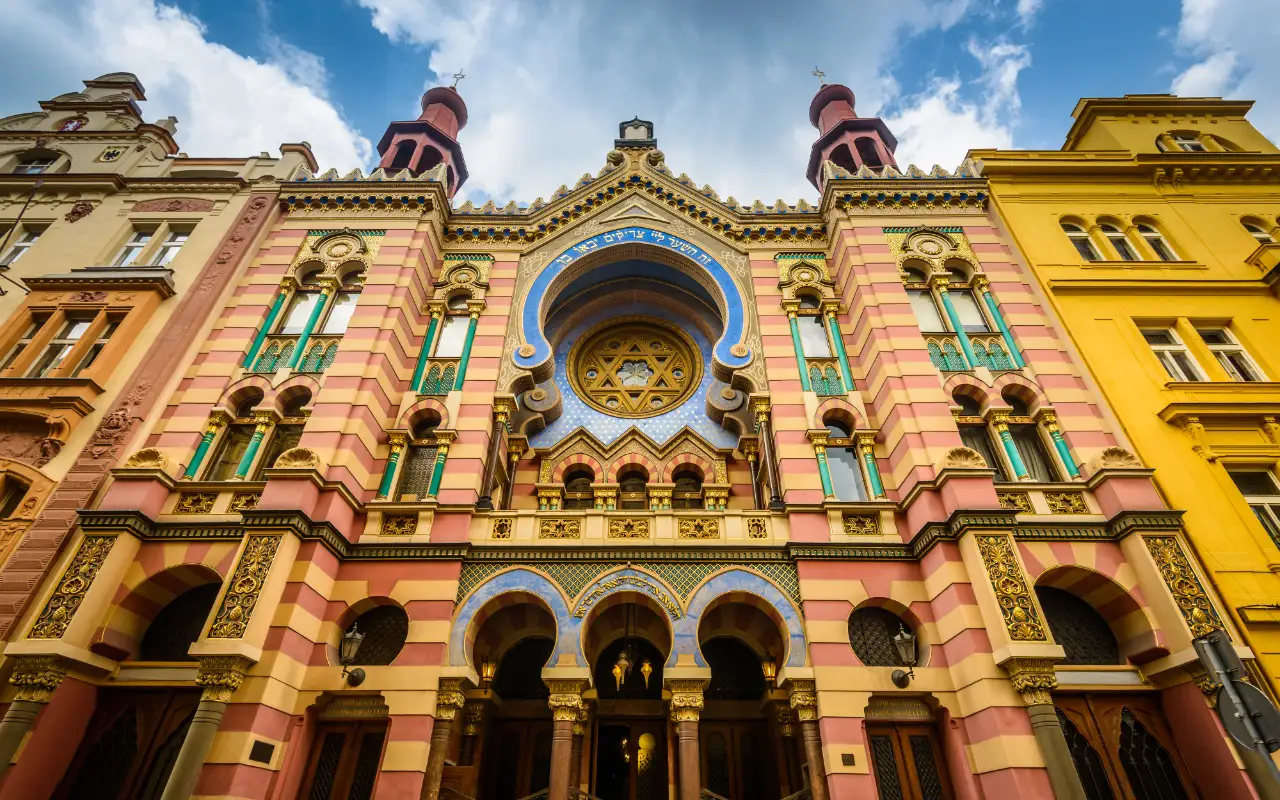
Continue to the Spanish Synagogue, its Moorish-revival interior ablaze with intricate stucco work, then explore the Klausen Synagogue’s baroque chambers and the Ceremonial Hall’s ornate ark. End at the Jewish Museum’s central hall, where artifacts and Torah scrolls illuminate daily life and tragic upheavals across centuries.
Background and Cultural Context
Jewish settlement in Prague dates back to the 10th century; by the 13th century Josefov had become a self-governing ghetto. Under Emperor Rudolf II and later Joseph II, restrictions eased and synagogues gained Baroque facades. However, the community endured expulsions, pogroms, and—in the 20th century—the Holocaust’s near-annihilation of Czech Jewry.
After World War II, many buildings fell into decay before post-Communist restoration efforts returned Josefov to its former grandeur. Today, the district stands as both a memorial and a celebration of Jewish culture, hosting concerts, lectures, and interfaith dialogues amid its sacred spaces.
Best Time to Visit
Early morning (9–10 AM) weekdays offer quiet reflection in synagogues and the cemetery before tour groups arrive. Late spring (May–June) and early autumn (September) provide mild weather and fewer crowds. Evening guided tours—when interiors are softly lit—add an atmospheric dimension to the quarter’s monuments.
How to Get There
Josefov is a short walk from Staroměstská metro station (Line A) or tram stops on Pařížská Street (Lines 2, 17). From Old Town Square, follow Dlouhá Street north to Maiselova Street. The Jewish Museum’s ticket office and main entrance are signposted on U Staré školy street.
Photo Opportunities
- The moss-covered headstones of the Old Jewish Cemetery in soft morning light
- Stained-glass windows and horseshoe arches inside the Spanish Synagogue
- Architectural detail of the Pinkas Synagogue’s vaulted ceiling and memorial inscriptions
- Cobblestone alleyways flanked by synagogue façades on Maiselova Street
- Exterior of the Klausen Synagogue framed by autumnal trees in the courtyard
Travel Tips
- Purchase a combined Jewish Museum ticket in advance to cover all six sites and skip the lines.
- Dress respectfully—head coverings are provided for synagogue visits if needed.
- Allow at least two hours to fully explore the cemetery and synagogues at a leisurely pace.
- Use the free audio guide included with most tickets for deeper historical context.
- Maintain silence or lower voices in sacred spaces out of respect for worship and remembrance.
FAQs
Is there an entry fee?
Yes—a single ticket covers entry to all six synagogues, the cemetery, and the Jewish Museum exhibitions. Discounts are available for students and seniors.
Are guided tours available?
Yes—official guided tours depart regularly from the ticket office and include expert commentary on architecture, history, and culture.
Can I take photographs inside?
Non-flash photography is permitted in most areas, though some exhibitions may restrict images—look for signage or ask staff.
How long does a visit take?
Plan for 2–3 hours to see all sites; a shorter 90-minute tour covers the highlights if you’re pressed for time.
Final Thoughts
Prague’s Jewish Quarter is a profound tapestry of spiritual endurance, cultural achievement, and historical memory. Wandering its corridors and hallowed halls, you’ll gain not only a deeper understanding of Central European Jewry but also a moving perspective on human resilience and the power of remembrance.